The Ngāi Tahu story of Aoraki
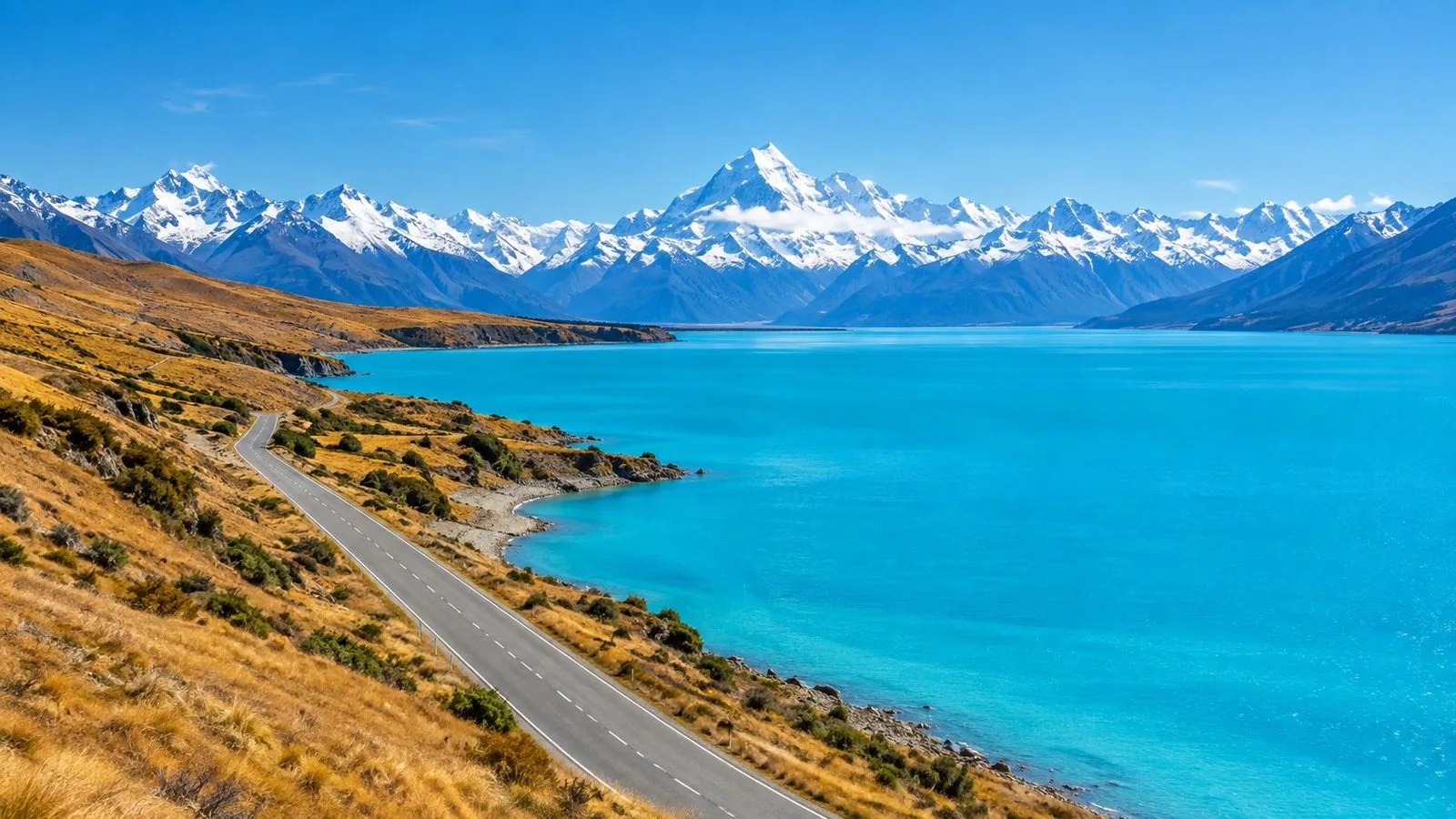
Only one day at Mount Cook?A small-group day tour gets you onto the Hooker Valley Track from Queenstown, Christchurch or Lake Tekapo without the long drive at the wheel, and a scenic flight from Mount Cook Airport lands you in the snow above the Tasman Glacier. These are the options worth comparing.
Compare the toursThe story of the waka
I tell this as I have read it in Ngāi Tahu’s own accounts, and I tell it plainly, because it is not mine to decorate. Aoraki was the eldest son of Raki, the Sky Father. With his brothers he brought a waka down from the heavens to visit Papatūānuku, the Earth Mother. When they tried to return, Aoraki misspoke the karakia, and the waka fell into the sea and tipped onto its side. The brothers went up to its high side, and there they turned to stone. They became the peaks of the Southern Alps, and the waka became the South Island, Te Waka o Aoraki. A fuller telling is in Understanding Aoraki, in Ngāi Tahu’s magazine Te Karaka.
Aoraki and his brothers
The brothers stand around Aoraki still, though accounts vary on their names and on which peak is which. In one telling, Rakiroa became Mount Dampier, Rakirua became Mount Teichelmann, and Rārakiroa became Mount Tasman, Horokōau. I use those names with that caution attached, and I would rather leave a peak unnamed than give it the wrong ancestor.
Another account
There are different accounts of how Aoraki came to stand here. DOC also records a second tradition, in which the waka Ārai Te Uru was wrecked near Shag Point, Matakaea, and Aoraki, as a boy carried on the shoulders of his grandfather Kirikirikatata, was turned to stone at sunrise. I don’t try to reconcile the two; both are told, and both are Ngāi Tahu’s to tell.
An ancestor, not only a mountain
Aoraki is the most sacred ancestor of Ngāi Tahu. The mountain has Tōpuni status, a public symbol of Ngāi Tahu mana and identity, which DOC explains in DOC’s history of Aoraki / Mount Cook. Standing on the summit is regarded as standing on the head of an ancestor, and guided parties who reach the top stop a few steps short of the highest point out of respect. What that final day on the ice involves is on how hard Aoraki is to climb.
What the name means
Aoraki is often translated as “Cloud Piercer”, from ao, cloud, and raki, sky, but to Ngāi Tahu it is first of all the name of an ancestor. Wikipedia calls the translation a romantic rendering. Aoraki is the southern, Ngāi Tahu form of Aorangi. The English name came in 1851, when Captain John Lort Stokes of HMS Acheron named the peak after Captain James Cook, who never saw it.
The 1998 settlement
The Ngāi Tahu Claims Settlement Act 1998 made the official name Aoraki / Mount Cook, and the village and the national park took the same name. Under the settlement, the Crown agreed to vest the title to Aoraki in Te Rūnanga o Ngāi Tahu, which would then give the mountain to the nation. Neither step has happened yet, and Ngāi Tahu can decide when it will. The iwi sets out the settlement on Ngāi Tahu’s own page on Aoraki and the settlement.
Being a respectful visitor
Nothing here asks much of a walker. I use the full name, Aoraki / Mount Cook, and I think of the mountain as someone’s ancestor when I look at it from the tracks, which changes how you talk about it more than you might expect. Keep to the formed tracks, as DOC asks. If you want the story told on the road, the day tour from Queenstown includes commentary on Māori heritage along with the geography. The best places to see Aoraki on foot are on the best walks at Aoraki, and the closest is the lake at the end of the Hooker Valley Track.
Aoraki from the air
GetYourGuide sells nothing on the summit of Aoraki and no guided Hooker Valley walk as such. What it does sell, close to the mountain, are two scenic flights from Mount Cook Airport. The shorter one lands in the mountains facing Aoraki, with the high peaks all around you. The 25-minute helicopter flight leaves Mount Cook Airport, near the village, and flies up the Tasman Valley over a glacier lake to an alpine landing facing Aoraki, where you get out and stand in the mountains for a few minutes. There is snow at the landing site most of the year, but not always in summer, and the time on the ground counts inside the 25 minutes. The passenger weight limit is 116 kg, and wind or cloud can cancel it, in which case you are offered another flight or a full refund. Full refund if you cancel up to 24 hours ahead.
Frequently asked questions
What is the Māori myth of Aoraki?
In the best-known Ngāi Tahu account, Aoraki and his brothers came down from the sky in a waka that ran aground and tipped over. The brothers turned to stone as the Southern Alps, and the waka became the South Island, Te Waka o Aoraki. Accounts vary.
What does Aoraki mean?
It is usually translated from ao, cloud, and raki, sky, but to Ngāi Tahu it is first of all the name of an ancestor.
Who are Aoraki’s brothers?
In one telling, Rakiroa is Mount Dampier, Rakirua is Mount Teichelmann and Rārakiroa is Mount Tasman. Accounts vary.
Has the mountain been returned to Ngāi Tahu?
Not yet. Under the 1998 settlement, the title is to be vested in Te Rūnanga o Ngāi Tahu, which would then give it to the nation. Neither step has happened.
Why do guided parties stop short of the summit?
Out of respect for Ngāi Tahu: standing on the summit is regarded as standing on the head of an ancestor. More on how hard Aoraki is to climb.
Can I see Aoraki and the peaks around it from a flight?
Yes. Both scenic flights from Mount Cook Airport land facing Aoraki; they are compared on the helicopter flights page.